How to play
Finish Sarlacc when the entire overlap graph is disentangled through the six cells and transferred to the foundations. Completion is checked from the entire position, not from a displayed answer or a visual approximation.
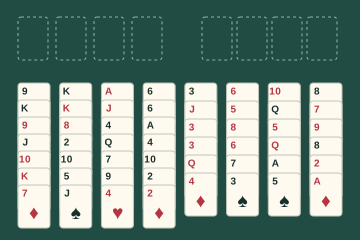
- Read the opening of Sarlacc by locating every lane, clue, reserve, room, or fixed element named in its rule. Ten- and eleven-card overlap chains create a fixed exposure graph; six cells supplement movement but only exposed packet tails may leave the interlocked layout. The seeded deal and rules version reproduce that public starting information without exposing a hidden completion.
- Check each proposed action against the current position and this boundary: Ten- and eleven-card overlap chains create a fixed exposure graph; six cells supplement movement but only exposed packet tails may leave the interlocked layout. Illegal, stale, and post-finish actions are rejected without changing the board.
- Finish Sarlacc when the entire overlap graph is disentangled through the six cells and transferred to the foundations. Completion is checked from the entire position, not from a displayed answer or a visual approximation.
Strategy tips
- Trace the overlap chains from their exposed tails inward and use the six cells to hold cards that release two blocked branches rather than only one local card.
- Attempting to lift an interior packet ignores the exposure graph; only the visible tail is mobile, and filling cells with unrelated cards removes the needed leverage.
- During the final few decisions, compare every unresolved obligation with the target: the entire overlap graph is disentangled through the six cells and transferred to the foundations. Keep the option described in the strategy note available until the last forced dependency is settled.