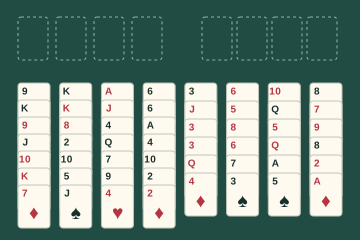
The complete layout is visible
Each tableau column starts with six face-up cards. Only the exposed end card of a column may move, so seeing the whole deal helps planning but does not make buried cards immediately available.
Move all 52 cards to the suited foundations, building each one upward from Ace to King.
Move all 52 cards to the suited foundations, building each one upward from Ace to King.
Complete guide
Beleaguered Castle is an open patience game with no stock and no hidden cards. The four Aces begin on their foundations, while the other 48 cards form eight columns that must be untangled one exposed card at a time.
Each tableau column starts with six face-up cards. Only the exposed end card of a column may move, so seeing the whole deal helps planning but does not make buried cards immediately available.
An exposed card may be placed on a card exactly one rank higher without regard to suit. Only one card moves at a time; a descending run cannot be lifted as a unit.
Any exposed single card may enter an empty tableau column. That space is the game's main staging tool, so use it to release low foundation cards and try to reopen it quickly.
All four Aces are already placed. Add the Two, Three, and later ranks of the same suit in order until every foundation reaches its King. A premature tableau move can still block the next required rank.
No. Every non-Ace card is dealt face up into the eight tableau columns at the start.
No. This implementation permits only the single exposed card of a column to move.
Any exposed single card may be moved into an empty tableau column.