Rouge et Noir

Place all 104 cards across the four upward foundations and four complete-sequence foundations.

Loading game

Stats on this device

Your unfinished game is saved only in this browser.

Played
0
Wins
0
Win rate
Fastest win
Fewest moves
Best score
Current streak
0 days
Best streak
0 days

How to play

Place all 104 cards across the four upward foundations and four complete-sequence foundations.

  • Two decks begin in ten tableau columns with depths eight, seven, six, five, four, three, two, one, one, and zero; only the top card of each occupied column is face up. Sixty-seven cards remain for row deals and eight foundations begin empty.
  • Build and move face-up runs downward in alternating colors, with only Kings entering empty columns. A single card may build an assigned Ace foundation upward by alternating color, while a complete thirteen-card alternating-color King-to-Ace run may leave as one unit for a sequence foundation. Stock clicks deal a row without a redeal.
  • Place all 104 cards across the four upward foundations and four complete-sequence foundations.

Strategy tips

  • Preserve long descending runs when they can mature into a thirteen-card foundation, but use the upward piles to release buried cards that would otherwise stop a row deal.
  • The first four foundations do not build by suit after their assigned Aces; they continue upward by alternating color, unlike ordinary solitaire foundations.
  • Before the last row deals, decide which exposed runs will finish as complete King-to-Ace packets and which ranks must feed the upward foundations.
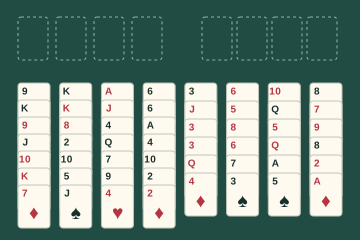
Complete guide

Rules, scoring, and strategy

Rouge et Noir is a complete browser implementation with its own versioned rules profile. Choose between four alternating-color upward foundations and four Spider-style King-to-Ace sequence foundations.

Setup and opening position

Two decks begin in ten tableau columns with depths eight, seven, six, five, four, three, two, one, one, and zero; only the top card of each occupied column is face up. Sixty-seven cards remain for row deals and eight foundations begin empty.

Legal moves and game flow

Build and move face-up runs downward in alternating colors, with only Kings entering empty columns. A single card may build an assigned Ace foundation upward by alternating color, while a complete thirteen-card alternating-color King-to-Ace run may leave as one unit for a sequence foundation. Stock clicks deal a row without a redeal.

Winning and terminal positions

Place all 104 cards across the four upward foundations and four complete-sequence foundations. Before the last row deals, decide which exposed runs will finish as complete King-to-Ace packets and which ranks must feed the upward foundations.

Practical strategy

Preserve long descending runs when they can mature into a thirteen-card foundation, but use the upward piles to release buried cards that would otherwise stop a row deal. The first four foundations do not build by suit after their assigned Aces; they continue upward by alternating color, unlike ordinary solitaire foundations.

Questions players ask

What is the objective in Rouge et Noir?

Place all 104 cards across the four upward foundations and four complete-sequence foundations.

Which moves are legal in Rouge et Noir?

Build and move face-up runs downward in alternating colors, with only Kings entering empty columns. A single card may build an assigned Ace foundation upward by alternating color, while a complete thirteen-card alternating-color King-to-Ace run may leave as one unit for a sequence foundation. Stock clicks deal a row without a redeal.

What should I plan first in Rouge et Noir?

Preserve long descending runs when they can mature into a thirteen-card foundation, but use the upward piles to release buried cards that would otherwise stop a row deal.