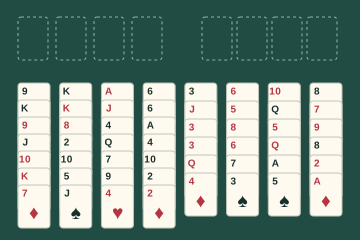
The first row starts with ten cards
The remaining 96 cards enter the grid and foundations after the eight starters are removed. New stock rows contain up to ten cards, but existing vertical holes are filled before another complete row opens.
Move both decks onto four ascending and four descending suited foundations.
Your unfinished game is saved only in this browser.
Move both decks onto four ascending and four descending suited foundations.
Complete guide
Parallels starts one Ace and one King of each suit on eight foundations, then deals two decks into a growing seven-by-ten grid. Accessible cards build upward from Aces or downward from Kings, and stock deals first repair holes.
The remaining 96 cards enter the grid and foundations after the eight starters are removed. New stock rows contain up to ten cards, but existing vertical holes are filled before another complete row opens.
Cards in the first and last grid rows are accessible. A card in a middle row is accessible only when the cell immediately above or below it is empty, so foundation moves create vertical channels through the layout.
The Ace foundation for each suit rises through King, while its King foundation descends through Ace. A card may have only one legal direction at its current rank, and suits never mix.
If columns have holes or unequal heights, a stock action fills those gaps before extending the grid. Once seven full rows are occupied, no further deal can fit until foundation moves reopen cells.
No. Accessible tableau cards move only to a suited foundation.
It needs an empty cell directly above or directly below it.
Existing holes and shorter columns are repaired before a new ten-card row is opened.