Konane

Make the last legal jumping turn; the first player who begins a turn without an available capture loses.

Loading game

Stats on this device

Your unfinished game is saved only in this browser.

Played
0
Wins
0
Win rate
Fastest win
Fewest moves
Best score
Current streak
0 days
Best streak
0 days

How to play

Make the last legal jumping turn; the first player who begins a turn without an available capture loses.

  • An eight-by-eight board starts completely filled with thirty-two alternating stones per player. The first player removes one of their eligible corner or central stones, then the opponent removes an orthogonally adjacent stone.
  • Every playing turn contains at least one orthogonal jump over an adjacent enemy stone into the empty point beyond. Further jumps by that same stone are optional, but every jump in one sequence must continue in exactly the same direction.
  • Make the last legal jumping turn; the first player who begins a turn without an available capture loses.

Strategy tips

  • Treat the two opening holes as future lanes, not merely empty spaces. A long straight sequence can remove several stones, but stopping early may preserve the hole that blocks the opponent's best reply.
  • Konane never uses diagonal jumps or a change of direction inside one turn, and the second opening removal must neighbor the first empty point rather than any open square.
  • Count moves rather than stones: a side with fewer pieces can still win if its last jump leaves every opposing stone without an enemy-and-empty pair.
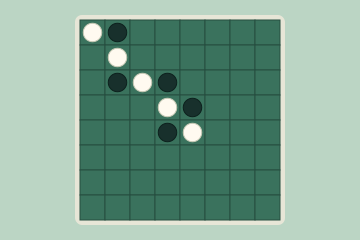
Complete guide

Rules, scoring, and strategy

Konane is a complete browser implementation with its own versioned rules profile. Open a full Hawaiian checkerboard with two precise removals, then make orthogonal jumps until one player has no capture left.

Setup and opening position

An eight-by-eight board starts completely filled with thirty-two alternating stones per player. The first player removes one of their eligible corner or central stones, then the opponent removes an orthogonally adjacent stone.

Legal moves and game flow

Every playing turn contains at least one orthogonal jump over an adjacent enemy stone into the empty point beyond. Further jumps by that same stone are optional, but every jump in one sequence must continue in exactly the same direction.

Winning and terminal positions

Make the last legal jumping turn; the first player who begins a turn without an available capture loses. Count moves rather than stones: a side with fewer pieces can still win if its last jump leaves every opposing stone without an enemy-and-empty pair.

Practical strategy

Treat the two opening holes as future lanes, not merely empty spaces. A long straight sequence can remove several stones, but stopping early may preserve the hole that blocks the opponent's best reply. Konane never uses diagonal jumps or a change of direction inside one turn, and the second opening removal must neighbor the first empty point rather than any open square.

Questions players ask

What is the objective in Konane?

Make the last legal jumping turn; the first player who begins a turn without an available capture loses.

Which moves are legal in Konane?

Every playing turn contains at least one orthogonal jump over an adjacent enemy stone into the empty point beyond. Further jumps by that same stone are optional, but every jump in one sequence must continue in exactly the same direction.

What should I plan first in Konane?

Treat the two opening holes as future lanes, not merely empty spaces. A long straight sequence can remove several stones, but stopping early may preserve the hole that blocks the opponent's best reply.