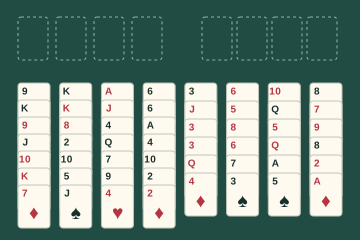
How to play
You complete Interment when every card reaches the required foundation under this profile's rank, suit, direction, and access constraints. The engine evaluates the full position rather than relying on a visual shortcut or an unsupported solvability claim.
- Interment opens from a versioned seeded position built for Five exposed reserves are independently refilled from a thirteen-card hidden queue; same-suit tableau gaps refill immediately from waste then stock. Its game ID, rules profile, and deal identity are stored together so restart recreates the same opening without a server request.
- Every Interment action is checked against the current board, available material, and this defining restriction: Five exposed reserves are independently refilled from a thirteen-card hidden queue; same-suit tableau gaps refill immediately from waste then stock. Invalid, stale, or post-terminal actions leave the position unchanged.
- You complete Interment when every card reaches the required foundation under this profile's rank, suit, direction, and access constraints. The engine evaluates the full position rather than relying on a visual shortcut or an unsupported solvability claim.
Strategy tips
- A practical Interment plan is to preserve several legal continuations around Five exposed reserves are independently refilled from a thirteen-card hidden queue; same-suit tableau gaps refill immediately from waste then stock. Use the deterministic hint to inspect one legal action, then compare how it affects the documented objective before committing.
- A common Interment error is to ignore the boundary rule that Five exposed reserves are independently refilled from a thirteen-card hidden queue; same-suit tableau gaps refill immediately from waste then stock. Undo is useful for studying that decision, while restart deliberately preserves the original seeded position.
- Near the end of Interment, recount the remaining obligations needed until every card reaches the required foundation under this profile's rank, suit, direction, and access constraints. Check the boundary rule after every final placement or transfer because terminal status is enforced immediately.