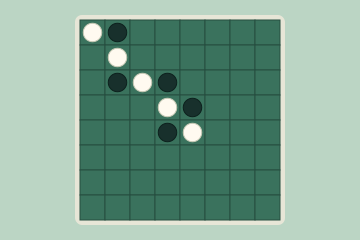
Setup and opening position
The five-by-six board begins empty and each player has twelve stones. Players alternate single placements until all twenty-four stones are down; rows formed during this drop phase do not capture.
Reduce the opponent to two stones or leave that player without a legal movement, making it impossible to form another legal three.
Your unfinished game is saved only in this browser.
Reduce the opponent to two stones or leave that player without a legal movement, making it impossible to form another legal three.
Complete guide
Dara is a complete browser implementation with its own versioned rules profile. Form exact orthogonal rows of three on a five-by-six board, capturing unprotected enemy stones after the placement phase.
The five-by-six board begins empty and each player has twelve stones. Players alternate single placements until all twenty-four stones are down; rows formed during this drop phase do not capture.
After placement, slide one stone orthogonally to an adjacent vacancy. A strict row or column of exactly three permits one enemy stone outside an opposing three to be removed; creating four or more consecutive own stones is illegal in either phase.
Reduce the opponent to two stones or leave that player without a legal movement, making it impossible to form another legal three. When material is low, protect stones inside exact threes and count whether moving one defender exposes an immediate opposing three or removes your final legal route.
Build two-stone shapes with several possible third points, preserve mobile pieces outside existing threes, and force the opponent to break protection before completing your capture row. A line of four is not a stronger mill—it is illegal—while a three made during initial placement earns no removal even though it may shape the later board.
Reduce the opponent to two stones or leave that player without a legal movement, making it impossible to form another legal three.
After placement, slide one stone orthogonally to an adjacent vacancy. A strict row or column of exactly three permits one enemy stone outside an opposing three to be removed; creating four or more consecutive own stones is illegal in either phase.
Build two-stone shapes with several possible third points, preserve mobile pieces outside existing threes, and force the opponent to break protection before completing your capture row.