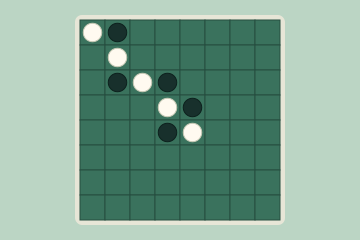
A bite changes a whole corner
Selecting row r and column c removes every remaining square whose row is at least r and column is at least c. The surviving rows therefore always form a nonincreasing staircase.
Force the computer to take the poisoned top-left square.
Your unfinished game is saved only in this browser.
Force the computer to take the poisoned top-left square.
Complete guide
Chomp is played on a rectangular chocolate bar whose top-left square is poisoned. A bite removes its chosen square and the entire rectangle extending down and right; whoever takes the poisoned square loses.
Selecting row r and column c removes every remaining square whose row is at least r and column is at least c. The surviving rows therefore always form a nonincreasing staircase.
The top-left square is legal but losing. Choosing it ends the round immediately and awards the win to the other player. Every other bite is safe for that turn.
Removing many squares may leave a simple winning reply, while a smaller bite may preserve an awkward boundary. Compare the row widths and look for balanced or mirrored shapes.
Late positions often contain one full top row and a short column. Identify which bites would force the opponent closer to the poison, then avoid handing over a shape with only one safe choice.
The top-left square is poisoned in this implementation.
It removes the selected square plus every present square below it and to its right.
No. A player must choose a remaining square, even when only the poisoned square remains.