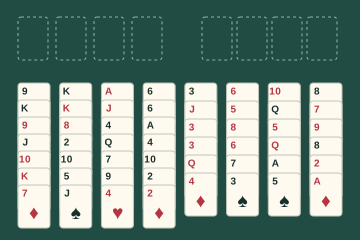
Setup and opening position
Two reserves receive thirteen cards each, four one-card tableau cells and one waste card are exposed, and seventy-three cards remain in stock. All eight foundations begin empty.
Complete the four upward and four downward suited foundations with both decks.
Your unfinished game is saved only in this browser.
Complete the four upward and four downward suited foundations with both decks.
Complete guide
Aces and Kings is a complete browser implementation with its own versioned rules profile. Empty two thirteen-card reserves and four stock-fed cells into four Ace-up and four King-down foundations.
Two reserves receive thirteen cards each, four one-card tableau cells and one waste card are exposed, and seventy-three cards remain in stock. All eight foundations begin empty.
Accessible reserve, tableau, waste, or foundation cards may build a suited foundation from Ace upward or King downward. An empty tableau cell refills directly from stock; after the stock is empty, any accessible card may enter an empty cell. Cards may transfer between compatible foundations, and there is no redeal.
Complete the four upward and four downward suited foundations with both decks. Once the stock is empty, exploit genuinely open tableau cells and reversible foundation transfers to release the final buried reserve cards.
Use foundation-to-foundation transfers to correct which copy entered an outward sequence, and expose both long reserve tops before the stock-fed cells close options. The two thirteen-card reserves are source stacks, not free cells, and an empty tableau cell cannot be chosen freely while stock remains to refill it.
Complete the four upward and four downward suited foundations with both decks.
Accessible reserve, tableau, waste, or foundation cards may build a suited foundation from Ace upward or King downward. An empty tableau cell refills directly from stock; after the stock is empty, any accessible card may enter an empty cell. Cards may transfer between compatible foundations, and there is no redeal.
Use foundation-to-foundation transfers to correct which copy entered an outward sequence, and expose both long reserve tops before the stock-fed cells close options.