The central movement rule
Any descending card or run may be placed on the next higher rank, but a multi-card stack moves together only when every card shares a suit. Complete same-suit King-to-Ace runs leave the tableau automatically.
Remove all cards by assembling complete descending sequences of the same suit from King to Ace.
Remove all cards by assembling complete descending sequences of the same suit from King to Ace.
Complete guide
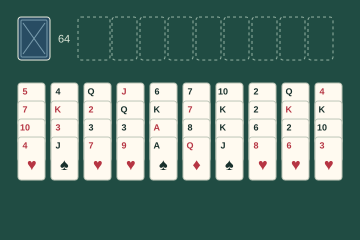
Spider uses two decks across ten columns. Complete eight same-suit runs from King to Ace. One suit teaches the system, two suits adds planning, and four suits is the full traditional challenge.
Any descending card or run may be placed on the next higher rank, but a multi-card stack moves together only when every card shares a suit. Complete same-suit King-to-Ace runs leave the tableau automatically.
One-suit uses eight copies of one suit, two-suit uses four copies of two suits, and four-suit uses two full decks. Each removed run adds 100 points. The variant is part of every daily and numbered deal.
Mixed-suit stacks may look organized but often become immovable. Do not spend an empty column on a short move unless it reveals a card or joins suits. Before dealing, scan every column because the new row may bury an opening.
Treat empty columns as temporary workspaces. Prefer moves that reveal hidden cards, empty a source, or merge same-suit fragments. On four-suit deals, several temporary off-suit placements may be necessary, so plan their exits before moving.
Spider allows descending placement across suits, but a multi-card run is movable only when all adjacent cards share the same suit.
All ten tableau columns must contain at least one card before a new stock row can be dealt.
Start with one suit, move to two when you can preserve empty columns, and use four when same-suit planning feels familiar.